


Back pain after gardening? The real reason isn't your age, but your tools.
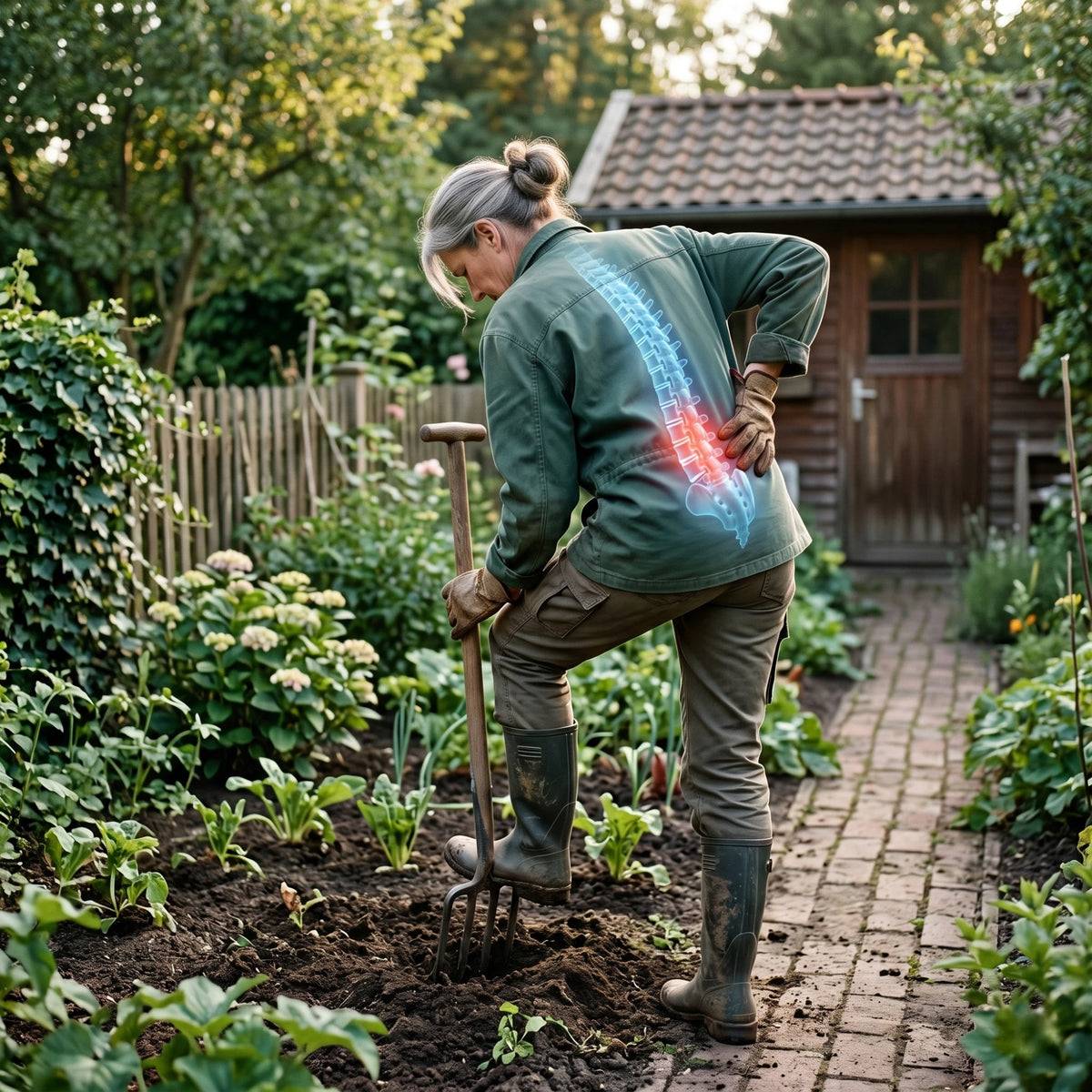
Twenty minutes of digging, and you feel it in your back. After one flower bed, you find yourself leaning on the shovel handle, and the next morning you can barely get out of bed. Many eventually blame their age, their fitness, or their “poor soil.” And at some point, that quiet thought creeps in: How much longer can I even keep this garden up?
The truth is uncomfortable and at the same time liberating: spades and classic garden forks force you into exactly the movement that every physical therapist warns against. Bent posture, rounded back, and then lifting: five to eight kilos of soil per thrust, several hundred times per bed. That is over two tons that your lower back lifts in a single afternoon.
So it was never about you. It was about the movement that your tool forces you into.
Perhaps you have already tried to take countermeasures: back exercises, a support belt, "learning to lift correctly." All of that only combats the symptoms, because the same bending and lifting motion awaits you again next weekend, only with a bit more muscle around it. And the rotary tiller? It may take the lifting off your hands, but in return, it destroys the very soil life that makes your garden bed fertile (more on that in a moment). As long as the movement does not change, the pain will not change either.
Stooping and lifting or upright and leveraging: the difference
This is exactly where the broadfork comes in, the double-tined digging fork that market gardeners have been using for decades. The difference can be seen at a glance:
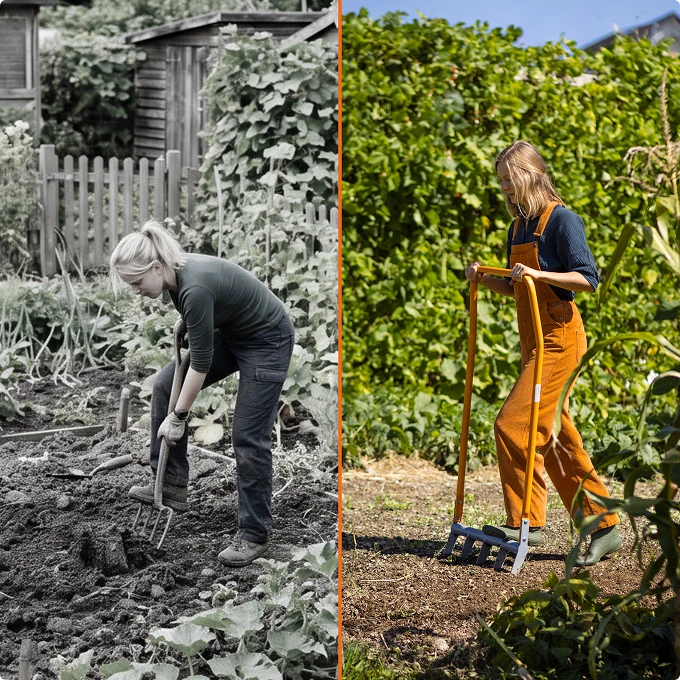
With the broadfork, you step onto the wide crossbar: your body weight pushes the tines up to 30 centimeters deep into the soil, without any muscular effort. Then you pull the two long handles toward you and let the leverage do the work. Your back remains straight the entire time, while your arms simply maintain your balance.
The result: You can do the work that took you a sweaty afternoon with a spade much more easily and in a fraction of the time. Up to 50 centimeters of bed width per pass, without lifting a single shovel of earth. That is why it is also suitable for gardeners who no longer feel up to heavy digging.
And your garden? That is the healthier way for it.
What saves your back also saves your soil. When digging, the natural layering is turned upside down: earthworms are sliced, fungal networks are torn apart, and soil life ends up where it cannot survive. The soil compacts and is harder the following spring than it was before.
The broadfork does the opposite: it opens the soil deep down without turning it over. Each layer remains where it belongs, earthworms and microorganisms simply continue their work, and the fine channels for water and roots remain intact.
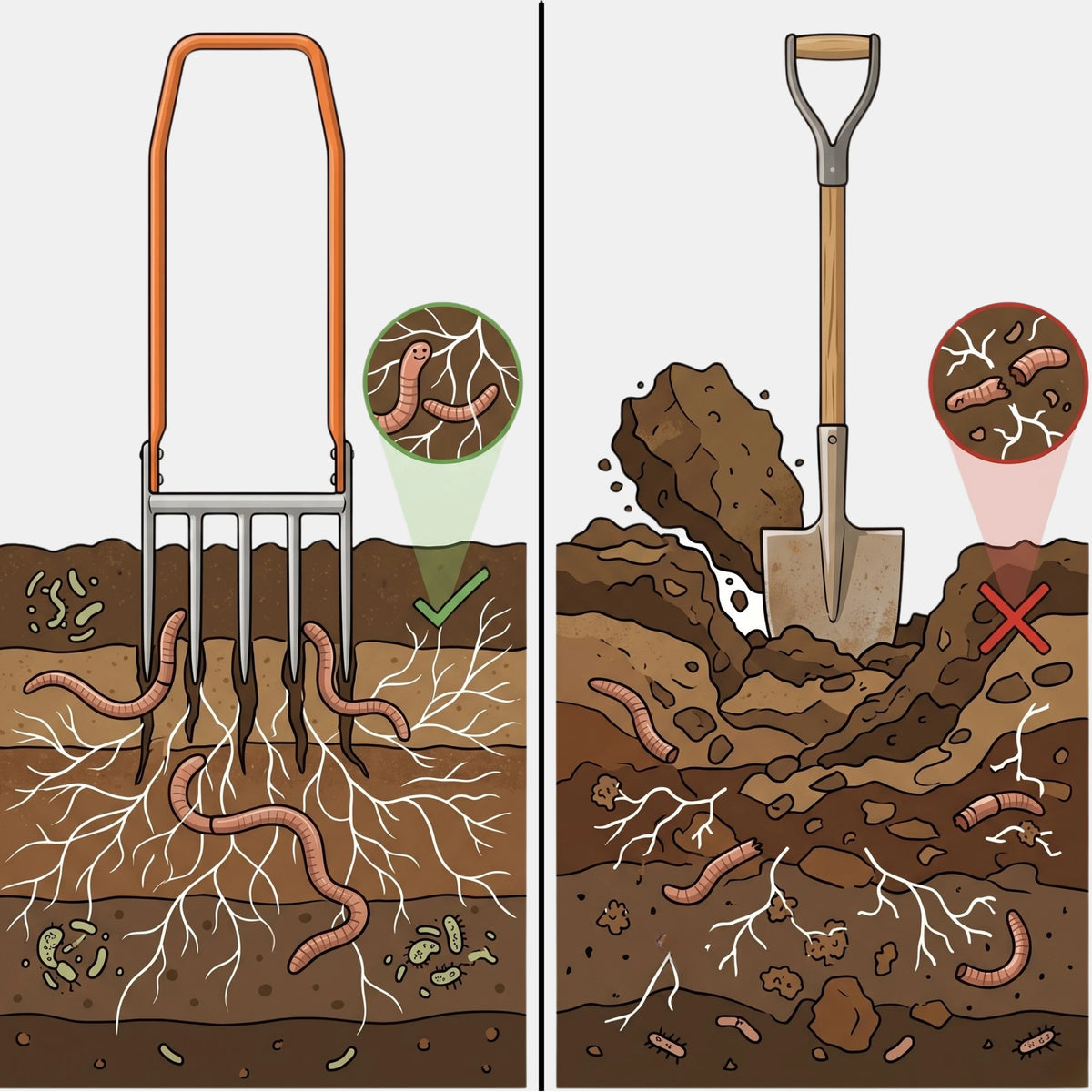
This pays off directly for your harvest: loose, vibrant soil retains more water, allows roots to grow deeper, and makes the bed more fertile year after year instead of harder. So, you not only save yourself the back-breaking work, but you also build better soil in the process.
AT A GLANCE
- Straight back: work with your body weight and leverage, not your lumbar spine
- Noticeably less effort: up to 50 cm bed width per stroke instead of shovel by shovel
- Significantly healthier for the soil: loosens at depth without destroying layers or soil life
What gardeners who have switched say
"I loosened our eight-meter-long garden bed in less than half an hour. It used to take an entire afternoon, and by evening, I couldn't get by without a hot water bottle. This time: nothing. I hardly believed it myself the next morning."
Renate K. (63), Lüneburg✓ Verified Purchase
"I was skeptical whether the tines would even penetrate our heavy clay soil. With my own weight on the foot bar, they go in like nothing. My spade has been sitting in the shed ever since."
Jürgen M. (58), Osnabrück✓ Verified Purchase
Why the broadfork from TERRADIX, of all things?
There are quite a few broadforks on the market now, and that is precisely the problem: cheap models use thin, spot-welded tines that bend in the first bit of compacted clay soil. You’re no longer levering; you’re just getting frustrated.
That is why the TERRADIX Broadfork 5x300 is made from 5 mm high-strength tool steel: five 30 cm tines, 50 cm working width, a tool built not for a season, but for generations. And if it doesn't convince you, simply return it within 30 days and get your money back. No questions asked.
The two most frequent questions
Does this also work in heavy, compacted clay soil?
That's exactly why. Because your full body weight presses onto the crossbar, the tines penetrate even into soil where you would struggle to make headway with a spade. In heavily compacted soil, work in two shallower passes during the first year; after that, it will become easier from one season to the next.
Do I need a lot of strength for that?
No, that is the whole point. Insert, pull, done: the lever and body weight do the work, not your arms and not your back. That is why even gardeners over seventy handle it with ease.
So, you have two options. You keep digging as before, with the same two tons each afternoon, reaching for the painkiller, and soil that gets harder every spring. Or you stand upright on the crossbar for the next garden bed, let the lever do the work, and notice something for the first time in years when evening comes: nothing.
Your back has done your tool's work for long enough. It's time for it to be the other way around.
MENTIONED IN THE ARTICLE
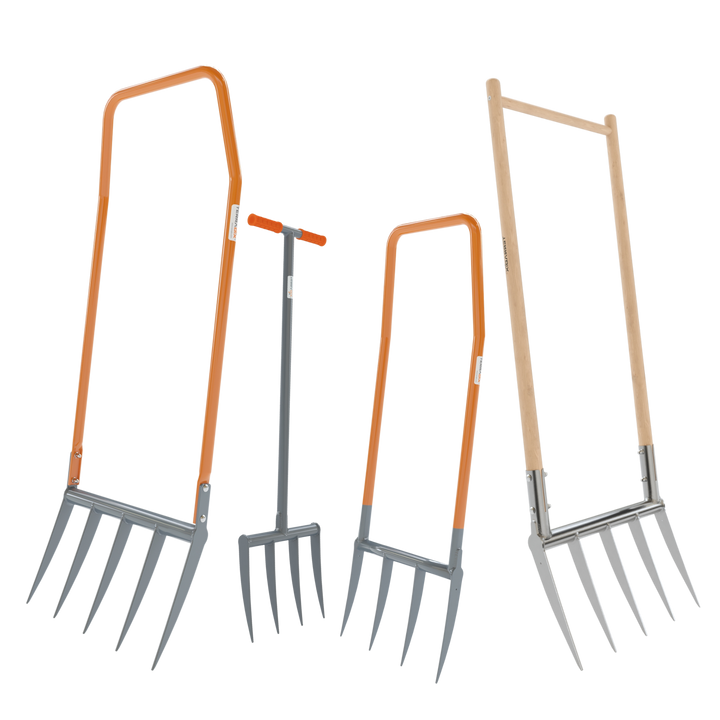
TERRADIX® Broadfork 5x300
Back-friendly deep loosening: 5 tines at 30 cm, 50 cm working width, 5 mm high-strength tool steel. Built for generations.
✓ 30-day money-back guarantee ✓ Free shipping on orders over €99